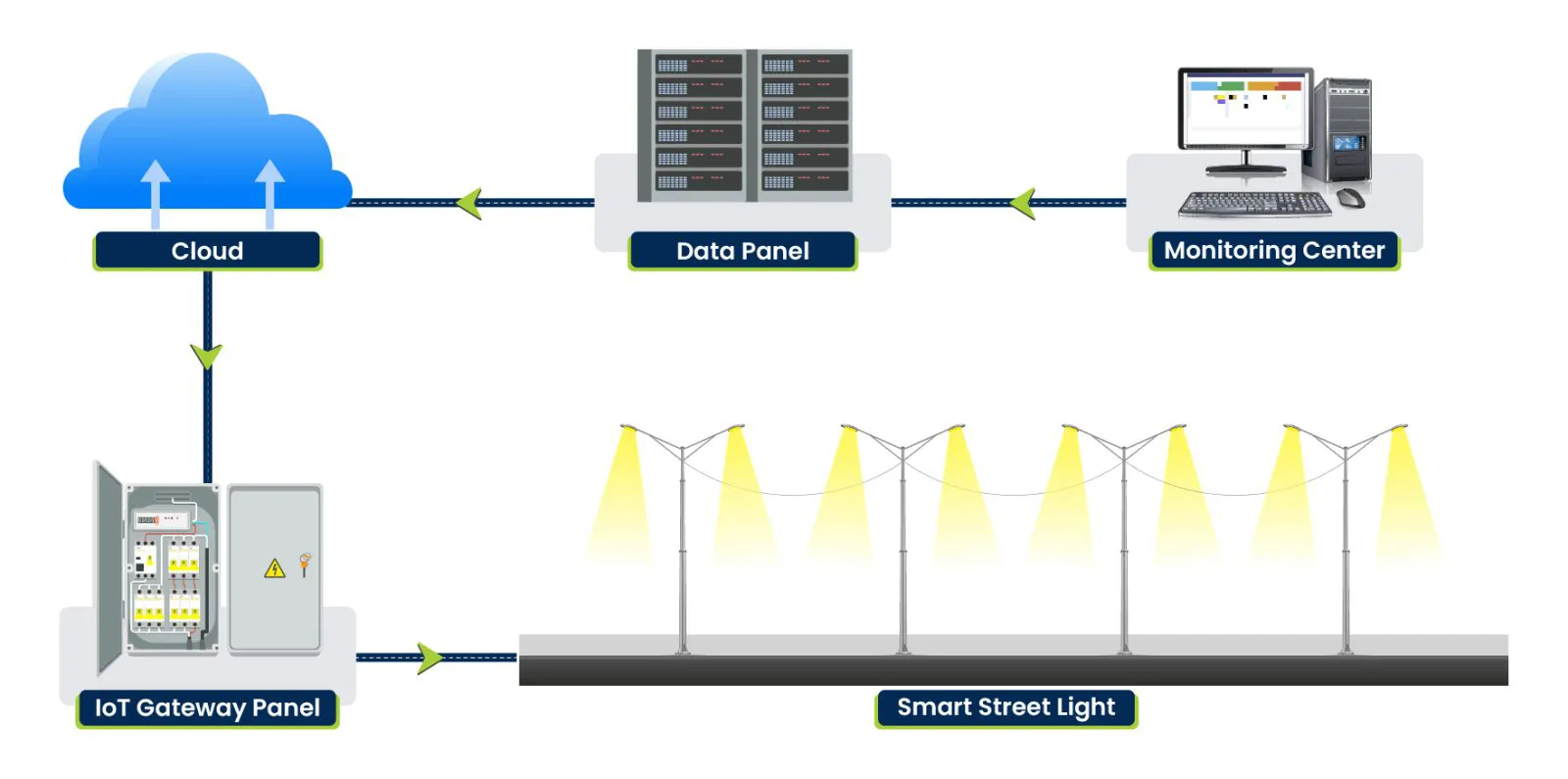
The city’s conventional street lighting system faced several challenges, including high energy consumption due to conventional lighting and manual operation, limited real-time visibility into individual street light status, delayed fault detection leading to extended maintenance cycles and service interruptions, and decentralised operations without a unified monitoring and control platform. These issues contributed to rising operational costs associated with energy consumption, maintenance, and field inspections. To address these challenges, the city required a scalable and intelligent street lighting solution that could enhance operational efficiency, reduce energy costs, enable real-time monitoring and control, and establish a strong foundation for future smart city infrastructure.